Have you ever built an expedition vehicle? I assume the answer is no, which is what I would also have to say. I never built an overland expedition vehicle until now, that is.

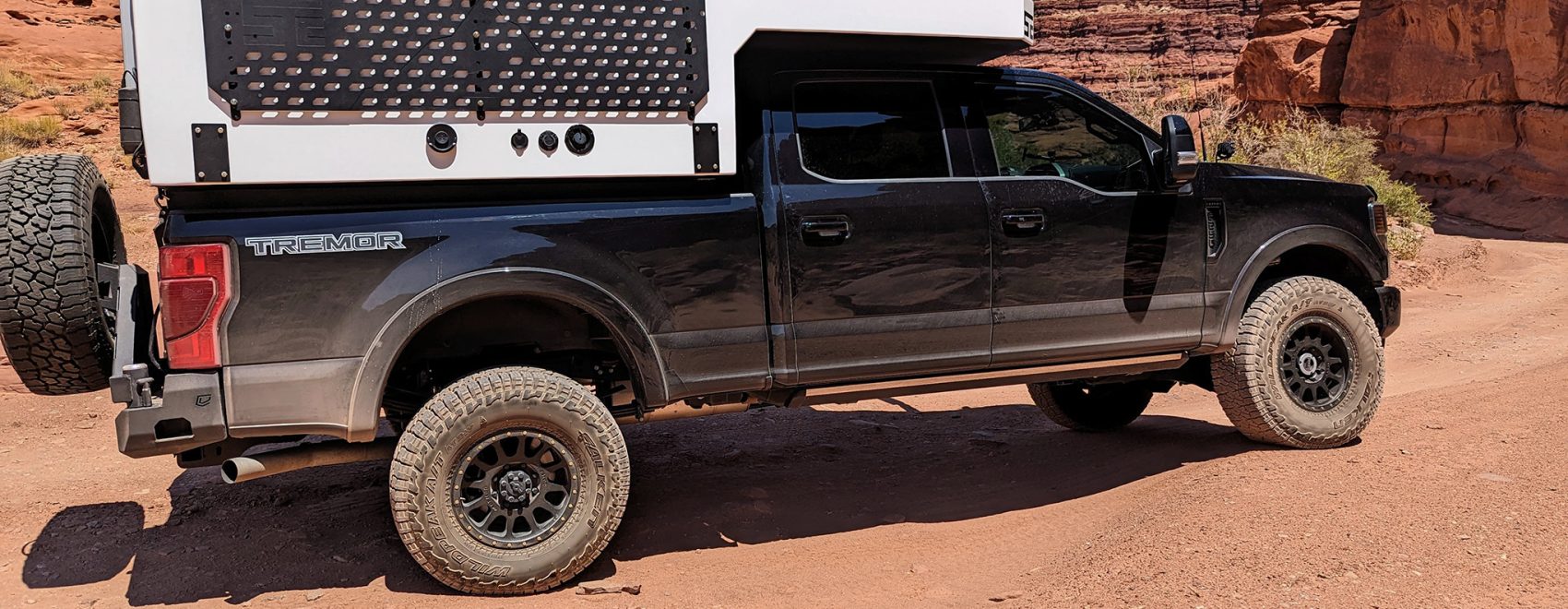
What you see behind me is my almost completed expedition vehicle. It started life as a 2022 Ford F250 Super Duty Tremor pickup truck in the Summer of 2022. I purchased the truck, then I picked a camper platform, and things took off from there.
I am knee-deep into this project and have already spent more than $200,000 on this vehicle/camper combo. I love it, but I made quite a few mistakes along the way – some of those mistakes were quite costly. Well, I am not fully done yet, but I figured I would make a first blog post about the mistakes I made along the way.
Mistake #1
Ha, this one is free of charge. I waited way too long to do something as crazy as this. Life is way too short, and I should have done this a long time ago. Don’t wait for the perfect moment in life – it won’t come when you are hoping for it, and sometimes it does not come at all. Don’t wait, YOU need to make it happen.
Here is a little story that I experienced just about 2 weeks ago. I am sitting at my desk at home doing some work on the computer when this older lady knocks on my door. She had seen my truck and camper in the driveway the other day (the day she knocked on my door the truck and camper actually were at the shop for some work). She and her husband were interested in what type of camper it was. We chatted for about 30 minutes in my driveway. I also told them a little bit about my plans for long-term travel and that I did not want to wait until I was in my 60s and retire. I mentioned that I would not know if I would still be fit and healthy enough to do all those things I wanted to do. They both said they wished they would have started traveling earlier. I am guessing their age and think they were in their late 60s or early 70s, and they clearly were not very fit and agile anymore. Their words were a good reminder for me to carry on with my plans.
Mistake #2
In a way, I got lucky, but it could have been quite costly, too. I bought my truck based on my own research. Once I had the truck I started looking for an offroad shop to help me to build it out. I found a great shop locally to where I live, and the experience working with Basil from Basil’s Garage and his team has been nothing but great. In hindsight, I would look for an offroad shop first and discuss the high-level plan with them before spending a single dollar. Talk to Basil and tell him I send you 😉
Mistake #3
There is this other offroad truck in a nearby neighborhood. The truck looks great, inspiring me to do certain things to my own truck.

As an example, that other truck carries the spare tire in the rear on a Rigd Ultraswing hitch tire carrier, and that gave me the idea to do something similar once I upgraded my truck to 37” tires. I ordered a Chassis Unlimited Octane series rear bumper with two sing arms. Great looking bumper, good quality – but a not-so-good experience dealing with that company (Chassis Unlimited). There were no installation instructions, and their customer service rep gave me bad advice, which turned the installation into a nightmare. Purchasing this bumper turned out to be a costly mistake a) for money, b) for usability, and c) looks. The bumper looks cool on the rig, but due to the bad advice, the bumper never sat properly on my truck. Most people did not notice it, but I did notice the slightly angled installation. Overall, it looked cool on the truck, but the day-to-day usage of the swing arms let me realize that their functionality was limiting. In addition, the bumper had cutouts for the parking sensors of my truck, but mounting a 37” spare tire blocked the sensors, and they beeped constantly when reversing. The location of the parking sensor mounts in that bumper was bad. The bumper never fully made me happy, and in the end, I was glad that I got rid of it.
Mistake #4
When I bought my truck and started researching the different camper or camping solutions for the truck, I was not ready for certain decisions. I went to visit different manufacturers and resellers for campers that I liked. I went to Tiny Rig company in Los Angeles to check out their Alu-Cab options. I went to Four Wheel Campers at their location in Rancho Cucamonga. I went to Supertramp Campers in Golden, Colorado. The Alu-Cab solution at Tiny Rig was great if I would mostly use the camper for sleeping but not for living and working from it. The Four Wheel Camper Hawk slide-in camper just did not have any storage. I was really shocked to see it in person and how little it had to offer, and how outdated it felt. The Supertramp Flagship LT camper (a slide-in) addressed all the issues, and that is what I went with, but it came with a 12-month lead time. During those 12 months, I came to realize that I should probably consider a flatbed on my truck to have extra storage available and to get more usability out of the built. This decision came late in the process, and in hindsight – I should have made that call much earlier. But in August 2022 I was not ready to take my brand-new truck apart and put a flatbed on it. I could have saved myself money and probably a significant amount of time if I had been clearer about my final goal or vision.

Instead of buying the Supertramp Flagship LT, I probably would have bought a Four Wheel Camper Hawk Flatbed model, but I was not ready for this at that time. The Hawk Flatbed model was available with a much shorter lead time and at a lower price tag. Don’t get me wrong – I love the Supertramp camper. It looks modern, it provides so much daylight due to the abundance of windows, it just is a great camper all around. The Hawk would have grown on me, but a lot of American-made RVs and campers look so dark and outdated – the Supertramp is the exact opposite. I would have to spend much extra money and time to customize the Four Wheel Camper to my needs.
Mistake #5
This one mistake is 100% homemade. I wanted a tall truck with a good amount of ground clearance. Then I wanted a flatbed with a storage drawer. I should have spent a little more time to really run all the measurement numbers to see what this would look like in the end. I have a good amount of ground clearance; no worries. But the flatbed installation turned out to be mounting the camper significantly higher than expected. I will run into issues down the road when getting into more forestry areas and can expect significantly more pin-striping than necessary. It also shifts the center of gravity higher, which concerns me. And last but not least, it makes the entry to the camper very high above the ground.

As a matter of fact, so high that it is now a challenge to get my dog safely into the camper. I had a Little Giant 4-step step ladder purchased that would have done the trick if I had stuck to the factory truck bed, but not it is too short. And too short not only for the dog but also for myself. I can easily get into the camper from the Little Giant step ladder, but getting out of the camper is now a bit sketchy.
I purchased a Torklift scissors step ladder that will address the issue, but as so many things at this point – it adds extra cost to my build. The truck camper now also has an increased gap between the cab overhang and the roof of the truck. It is not bad by any means, but it bothers me a little bit. It is cosmetic, but it bothers me enough that I am not completely happy about it, and of course, to fix it, it means spending more money. Fortunately, the camper can be lowered by one inch, and I am putting a roof rack on top of the truck. It will close the gap and make it appear much smaller.
Summary
This is the first overland expedition vehicle that I have ever built. I have the feeling it won’t be the last, but we will see. I expected some problems and issues along the way, and reading through this post, I am not surprised, really.
Don’t get me wrong – I am extremely stoked and excited about this build. The truck is not completely done just yet, and the camper will also get a few customizations to make it mine. My goal is to live and work from the road, and I am close to being able to do that. If I have to put a number to it, I would say I am at 90% with this build.
I am planning to write a more detailed guide about how to build an expedition vehicle for overland travel, and I am excited to share my learnings with you when the time comes.
Leave a Reply